 Low diatribe
Blob typing
I'm generally a fan of duck typing, it can be elegant in code. Identity revealed by behavior, not declaration. If it looks like a duck and moves like a duck and quacks like a duck, treat it like a duck.
We have Muscovy ducks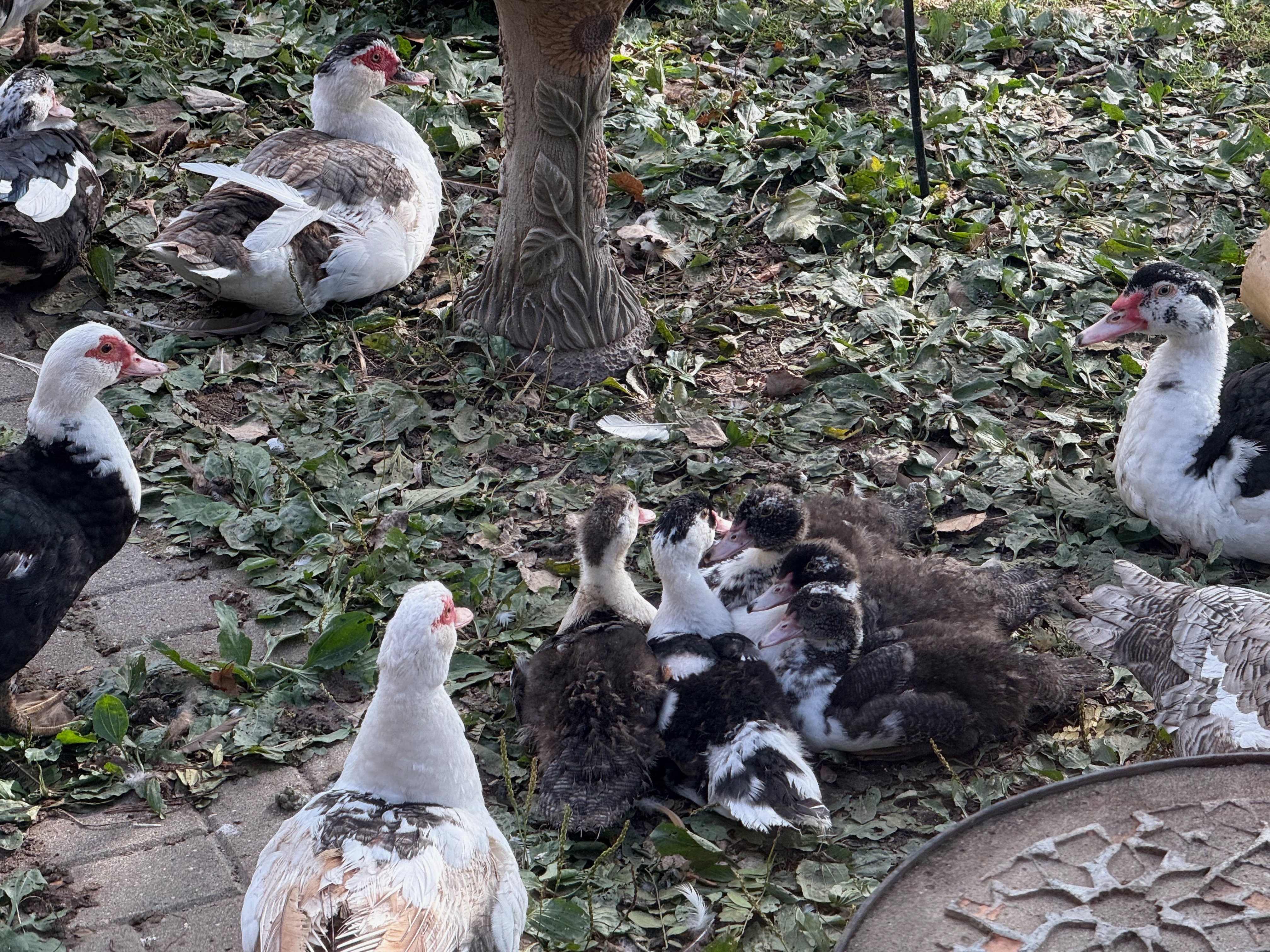 at our house — jungle birds from Central and South America. They walk like ducks. They mostly look like ducks. But they don't quack — they make a weird little warbling hiss instead.
They technically fail the duck test. I still tend to call them ducks.
Chico Marx saw this coming:
"Why a duck? Why not a chicken?"
It's a joke. It's also the question we stop asking once a framework starts feeling true.
Duck typing is what happens when we infer identity from behavior. Blob typing happens when we forget we're making a choice. Enough of the pattern fits in a particular context. Then the context shifts and we're left holding a category that no longer fits — or worse, one we keep using anyway because it's close enough and easier than recalibration.
Ant typing is one version of this. If you're carrying weight and reinforcing structure, you're an ant.
We know the fable. The ant works all summer. The grasshopper plays. Winter comes. The ant survives. The grasshopper doesn't.
The moral is clear: don't be a grasshopper. Be an ant.
The hedgehog and the fox. One big thing versus many things. Clean distinctions. Easy to debate.
Hedgehog typing: if you're focusing on one big thing, you're a hedgehog.
I thought I understood both. I thought I was being an ant. I thought I was being a hedgehog.
But that's not typing. That's type casting.
Typing infers identity from behavior. Casting tries to force an outcome by emulating the behavior.
I thought: do ant things, get ant results. Do hedgehog things, see hedgehog outcomes.
If the ant survives winter, I'll survive winter by doing what ants do. If the hedgehog wins by focusing on one big thing, I'll win by focusing on one big thing.
The behavior becomes a spell. The framework becomes certainty.
I chose the hedgehog approach this year, driven by an ant-like determination to prepare for winter. I went heads down, all in on one big thing: finding a role aligned with how I actually lead — quiet authority, long horizons, systems built on trust and durability rather than theatrics.
It was a principled bet. And it was real.
It was also unnatural. I'm a fox by nature — responsive, flexible, comfortable with many things at once. Committing to one big thing meant suppressing the adaptive instincts that usually serve me well.
What I misjudged wasn't the value of alignment. It was assuming alignment would be legible, timely, and reciprocated within the available timeframe.
I believed in a linear story that feels rational:
clarity → recognition → stability
It isn't false. It's just not guaranteed.
While I was focused like a hedgehog, I thought I was working like an ant. Carrying weight. Reinforcing structure. Choosing steadiness over spectacle. I believed that if I went through the motions long enough, the environment would eventually resolve itself into a colony.
That was the misread.
I was focused on my efforts without gauging whether the plan still fit the moment. Laboring forward as a hedge-ant. What I needed was some strategic foxing — looking up, reading the terrain, adapting to what was actually happening instead of what I believed should happen.
But I've learned that both planning and reacting are seductive traps. The hedgehog plans. The fox reacts. Both feel productive. Neither is focused on now — the one thing we actually have control over.
Ant work isn't just about behavior — it's about context. Ants don't survive because they're virtuous or tireless. They survive because the environment supports ant logic: shared shelter, distributed risk, collective winter planning.
I was pouring ant-labor into a hedgehog task. Putting my preparations into a possibility without accounting for inevitability. The market was moving. I stayed committed to the plan without adjusting for the shift.
Blob typing fails the same way. We identify the pattern. We match the behavior. We assume the category will hold. Then the context changes and the typing system breaks — not because we misread the behavior, but because we stopped checking whether the environment still supports the inference.
The Muscovy still looks like a duck. I still treat it like one. But if I needed it to quack, I'd be waiting a long time.
Duck typing works only if you keep asking the follow-up question:
Why a duck? Why not a chicken?
Emulating an ant refined how I build. Emulating a hedgehog taught me how to maintain deep focus. Being a fox comes naturally, and emulating a hedge-ant taught me that it's necessary to be a fox from time to time.
If I was going to emulate anything, it should have been a honey badger. The honey badger doesn't fit the fables, doesn't care about the frameworks. It doesn't plan for winter or pivot in real time. It works in the present. It figures out its next step, then makes it, regardless of cobra bite or bee sting. It responds to what's in front of it without requiring certainty and adapts without losing the thread.
These are all just stories — idealized for illustration, not instruction manuals for living. Reality requires checking whether the pattern still fits the moment; verifying the context, not trusting the category.
Silvaris. Strength in quiet. Quiet as revolution.
 Low diatribe uses cookies to keep the experience smooth.